What this vehicle inspection form covers
This checklist is built for a general condition check. It fits a used car purchase, a fleet walk around, a rental return, or a quick check before a long trip. The sections are:
- Exterior: body damage, glass, mirrors, wipers, plates and stickers
- Lights: headlights, tail and brake lights, turn signals, reverse lights
- Tires and wheels: tread depth on each tire, pressure, lug nuts
- Brakes: service brakes, parking brake, fluid level
- Under hood: oil, coolant, belts and hoses, battery, leaks
- Interior and safety: seat belts, horn, warning lights, heat and A/C, emergency kit
- Road test: steering, braking, engine and transmission, noises
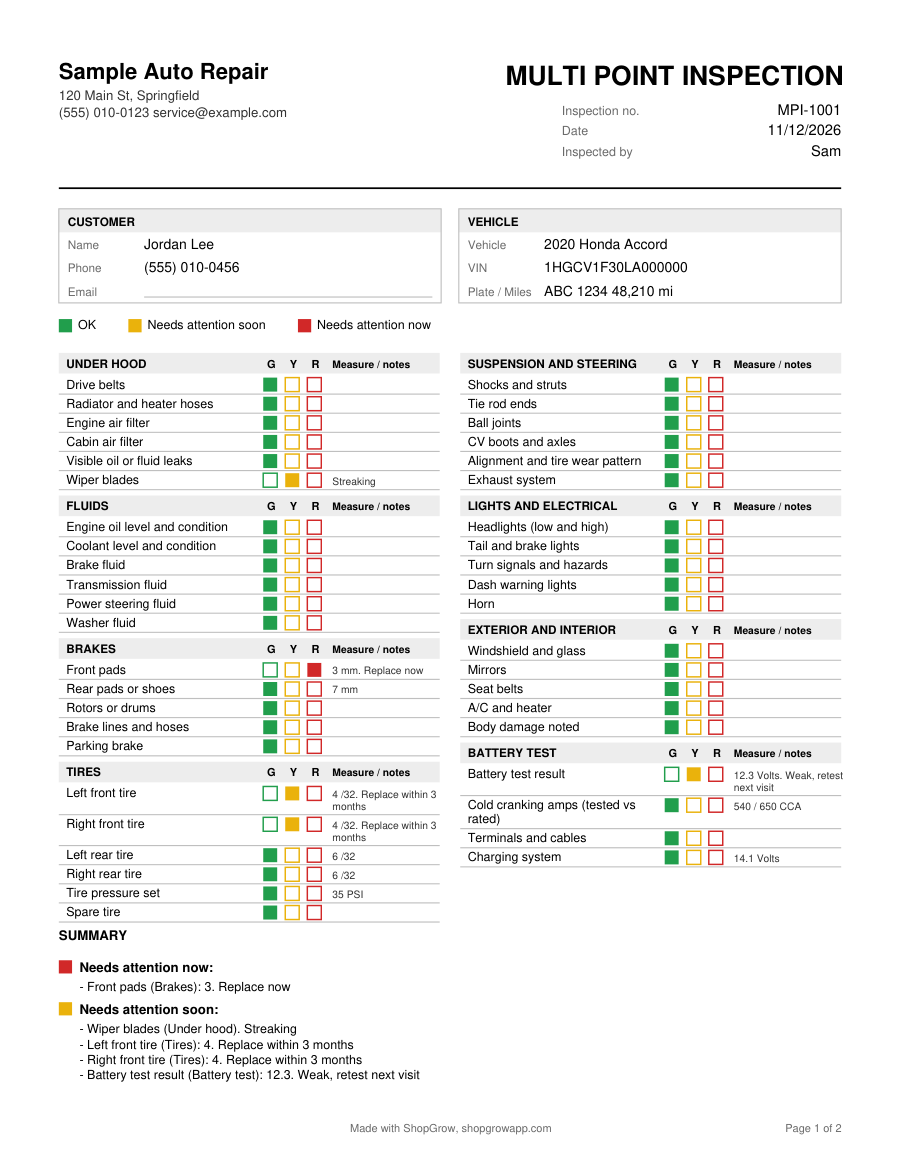
For a deeper shop inspection with brake pad and battery test measurements, use the multi point inspection checklist.
How to do a vehicle inspection
- Park on level ground with the engine off and cool for the under hood checks.
- Walk around the vehicle clockwise, starting at the driver door. Note every dent and chip.
- Have a helper confirm each light while you work the switches.
- Measure tread depth in the main grooves of each tire.
- Check fluids with the dipsticks and reservoir marks.
- Finish with a short road test: steering pull, brake feel, shifting and noises.
A filled example
A buyer checks a 2016 pickup with 98,400 miles. Exterior is fine except a cracked windshield on the passenger side, marked Soon. The right rear brake light is out, marked Now. Tires read 6/32 all around, marked OK. On the road test the steering pulls left, marked Soon with the note "check alignment". The PDF summary gives the buyer a short list to discuss with the seller.
Common mistakes
- Skipping the road test. Many problems only show up when the vehicle moves.
- Checking lights alone. You cannot see your own brake lights. Use a helper or a reflection.
- No photos. Take photos of any damage and keep them with the PDF.
- Treating it as a state inspection. This form is a record of condition, not an official inspection.
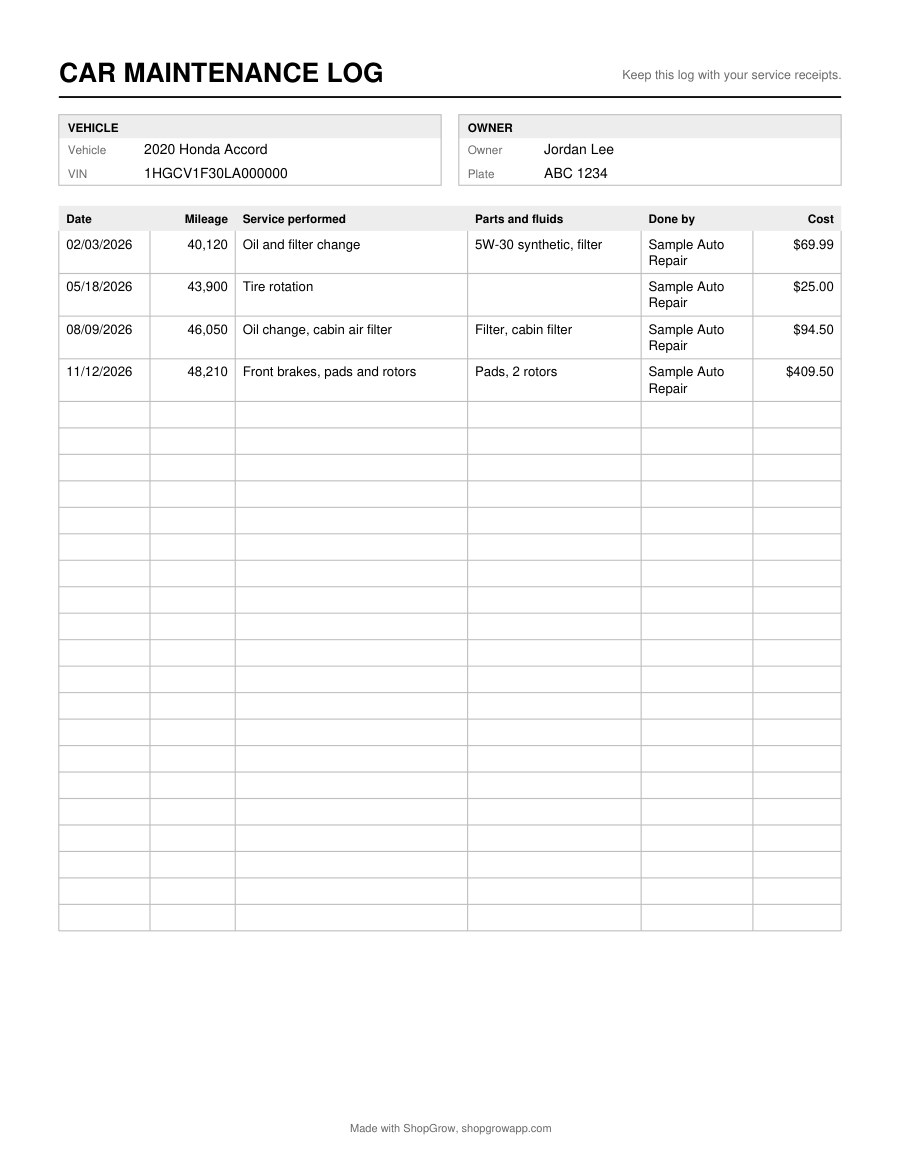
Keep the inspection with the vehicle's maintenance log so the next check can compare.