What a mechanic estimate should include
An estimate is a promise about price before the wrench turns. The clearer it is, the fewer arguments you have at pickup. A solid estimate lists:
- Shop name, address, phone and an estimate number
- Date written and how long the price is valid
- Customer contact details
- Vehicle year, make, model, VIN and current mileage
- The problem you are fixing, in plain words
- Each part with quantity and price, and each labor line with hours and rate
- Fees, tax and the estimated total
- A signature and date line where the customer approves the work
A filled example
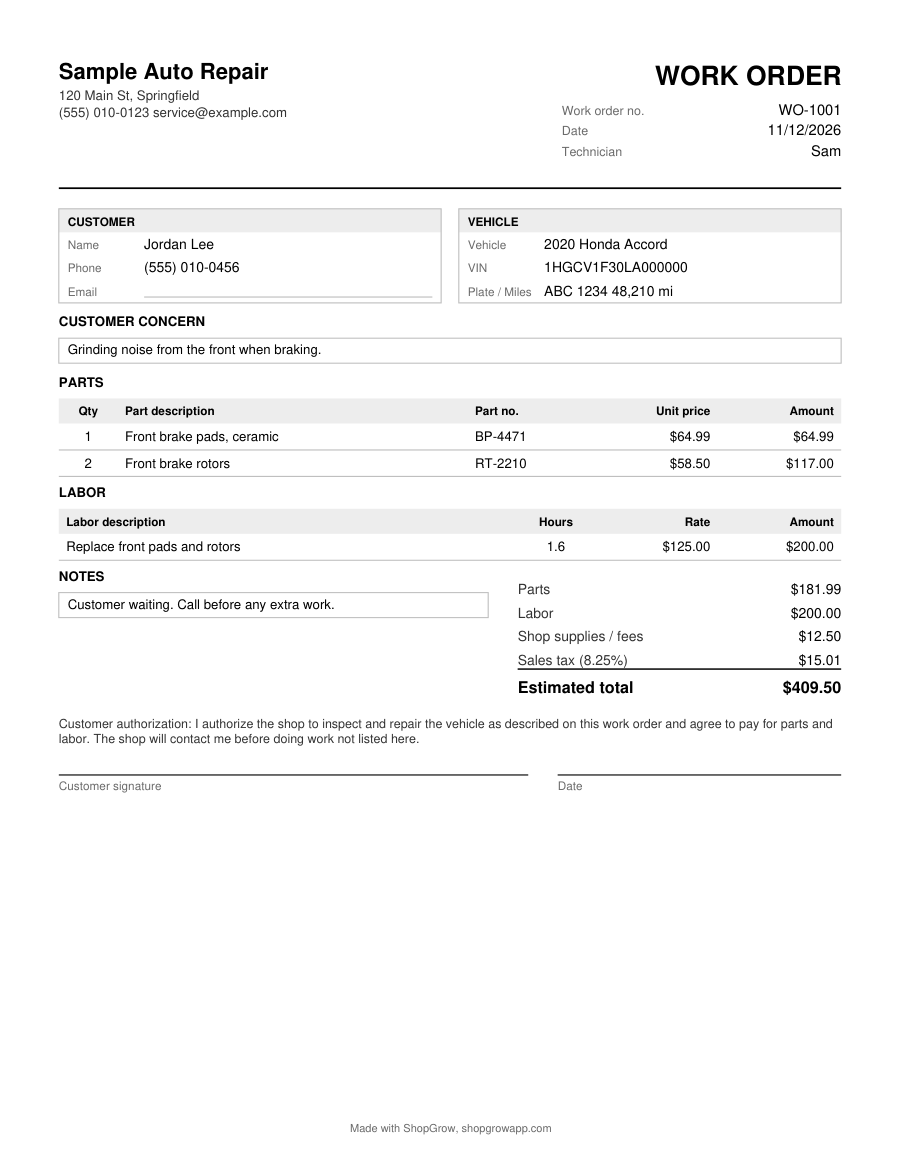
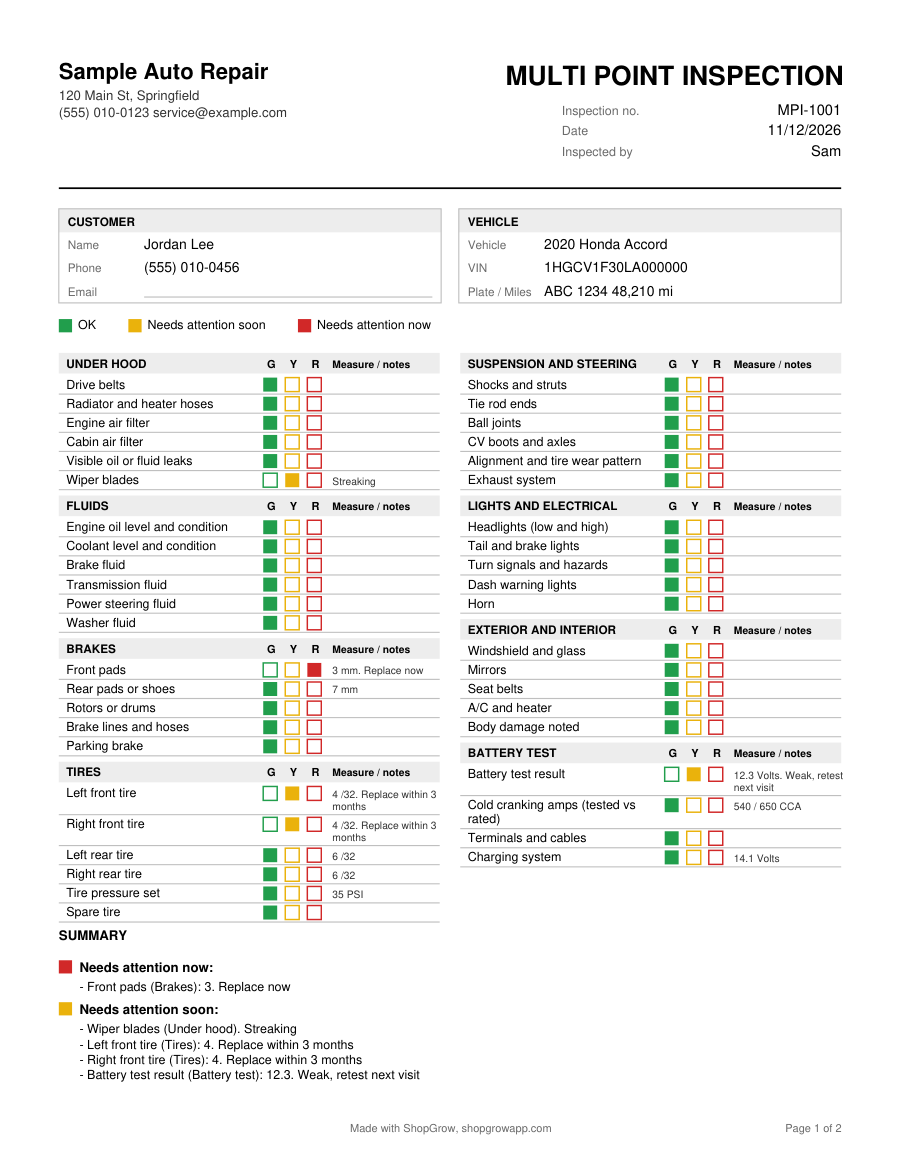
A customer reports a squeal from the front when braking. Your tech measures the front pads at 2 mm. The estimate reads: front pads $64.99, two front rotors at $58.50 each, 1.6 hours of labor at your rate, shop supplies, and tax on parts. The valid for field is set to 30 days. The customer signs the approval line before you start. If the calipers turn out to be seized, you call, add the new lines, and get a second approval before doing that work.
How to price an estimate
Two numbers drive every estimate: your labor rate and your parts markup. Work out your hourly rate from your real costs: rent, insurance, tools, your own pay and the hours you can actually bill, not the hours you are open. For parts, decide on a markup and stick to it, so two customers with the same job get the same price.
Write labor time from a labor guide or your own records, not a guess. If a job often runs long, say so in the notes, for example "rusted bolts may add time".
Common estimate mistakes
- No approval signature. Without it, it is your word against the customer's about what they agreed to.
- No end date. Parts prices move. An estimate with no valid until date can be held against you months later.
- Vague lines. "Brake work" tells the customer nothing. Name the parts and the labor.
- Extra work with no new approval. Always contact the customer before going past the estimate.
- Forgetting fees and tax. A total that jumps at pickup because of fees feels like a trick, even when it is not.
After the estimate
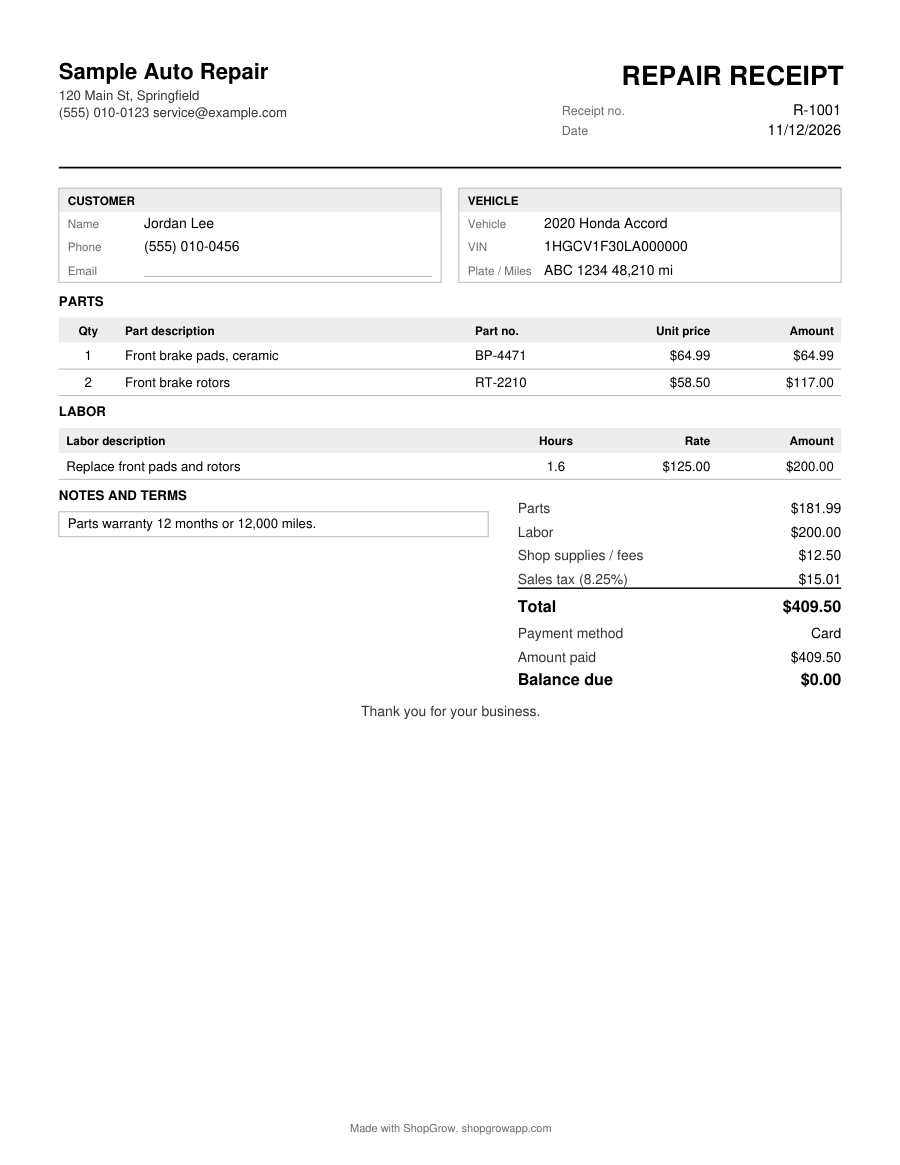
Once the customer approves, open a work order for the technician. When the job is done, switch this maker to Invoice, or hand over a receipt if they pay on the spot.